
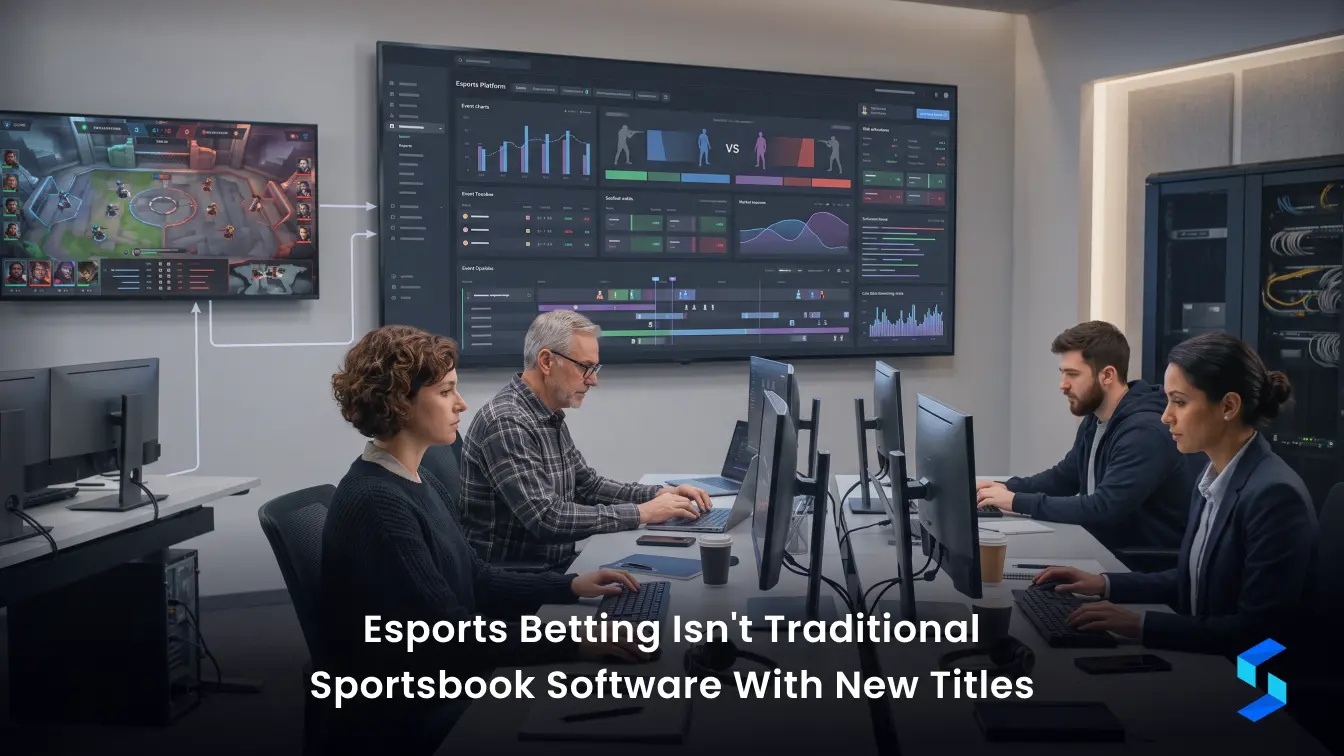
This guide covers technical platform requirements for esports betting specifically. For a broader provider comparison, see our esports casino software provider guide.
Which Titles Actually Drive Volume
Coverage of CS2, League of Legends, Dota 2, and Valorant is close to a minimum baseline for any operator targeting esports bettors, particularly Gen Z and crypto-native audiences who over-index on esports relative to traditional sports. Major CS2 tournaments alone (BLAST Premier, IEM, ESL Pro League, PGL Majors) draw odds coverage from dozens of bookmakers, evidence of how liquid this market has become — a sportsbook offering thin or delayed esports markets is competing directly against operators who’ve already invested in title-specific feed infrastructure.
Why Esports Data Feeds Are a Different Problem Than Traditional Sports
Esports-specific data providers exist because traditional sports data infrastructure doesn’t map cleanly onto competitive gaming — match structure, in-game events, and settlement triggers are fundamentally different from a football or basketball feed. Specialist esports odds providers deliver this data specifically formatted for programmatic use, so a receiving platform can parse team names, market types, and pricing without manual mapping per title.
WebSocket Streaming vs REST Polling: Not a Minor Technical Choice
REST API polling for live odds delivers roughly three to five times higher latency than WebSocket-based real-time streaming — a gap that matters enormously in esports, where in-game events (a round win, an objective capture) happen fast and repeatedly. A platform using polling for live esports odds will visibly lag and is exploitable through latency arbitrage by bettors watching the same stream faster than the platform’s price updates.
Comparison Table: Traditional Sportsbook vs Esports Betting Requirements
| Factor | Traditional Sportsbook | Esports Betting |
|---|---|---|
| Data feed structure | Standardised across most sports data vendors | Title-specific — CS2, LoL, Dota 2 each need dedicated feed mapping |
| Update mechanism | REST polling often still acceptable pre-match | WebSocket streaming close to mandatory for live markets |
| Audience profile | Broad, skews older | Skews younger, higher crypto-native overlap |
| Redundancy needs | Standard backup feed practice | Same principle, but fewer specialist backup providers exist per title |
Adding esports markets to your sportsbook?
Redundancy Is Harder to Get Right in Esports
Backup data sources and automated monitoring for feed interruptions matter just as much in esports as in traditional sports, but the pool of specialist esports data providers is smaller, which makes dual-sourcing a more deliberate vendor-selection exercise rather than a default add-on.
Settlement Complexity Varies Significantly by Title
A best-of-3 or best-of-5 match structure, common across CS2 and Dota 2, means markets can resolve at multiple points within a single match — map winner, series winner, map-specific props — each needing its own settlement trigger tied to the correct in-game event. Round-based titles add another layer, since round-level markets need near-instant settlement to keep pace with matches that can produce dozens of scoring events in under an hour. Platforms that treat esports settlement logic as a copy of traditional sports settlement tend to discover these gaps only after a disputed or delayed payout.
A Quick Checklist Before Adding Esports Markets
- Confirm feed coverage for your specific target titles, not just “esports” as a generic category
- Verify the feed uses WebSocket streaming for live markets, not REST polling
- Ask about backup/failover data sources specifically for esports, since fewer alternatives exist per title than in mainstream sports
- Check settlement-trigger logic per title, since match structure (best-of-3, best-of-5, round-based scoring) varies enough to affect how markets resolve
Where Esports Betting Intersects With Casino and Fantasy
Operators building an esports product often find natural overlap with fantasy esports and skin/skill-based casino-style mini-games built around the same titles — the underlying data feed and settlement infrastructure can frequently serve more than one product line, which is worth planning for during initial vendor selection rather than re-scoping later.
Ready to add esports coverage to your sportsbook?
Related Reading
- Esports Casino Software Provider Guide 2026
- B2B Sportsbook Solutions Guide 2026
- In-House Odds Engine vs Third-Party Feed
Further Reading & Sources
- TechBuzz Ireland — Sports Odds Feeds, Esports Odds APIs, and the Landscape of Betting on Esports
- Source Code Lab — Sportsbook Platform Must-Have Features: The 2026 Checklist