
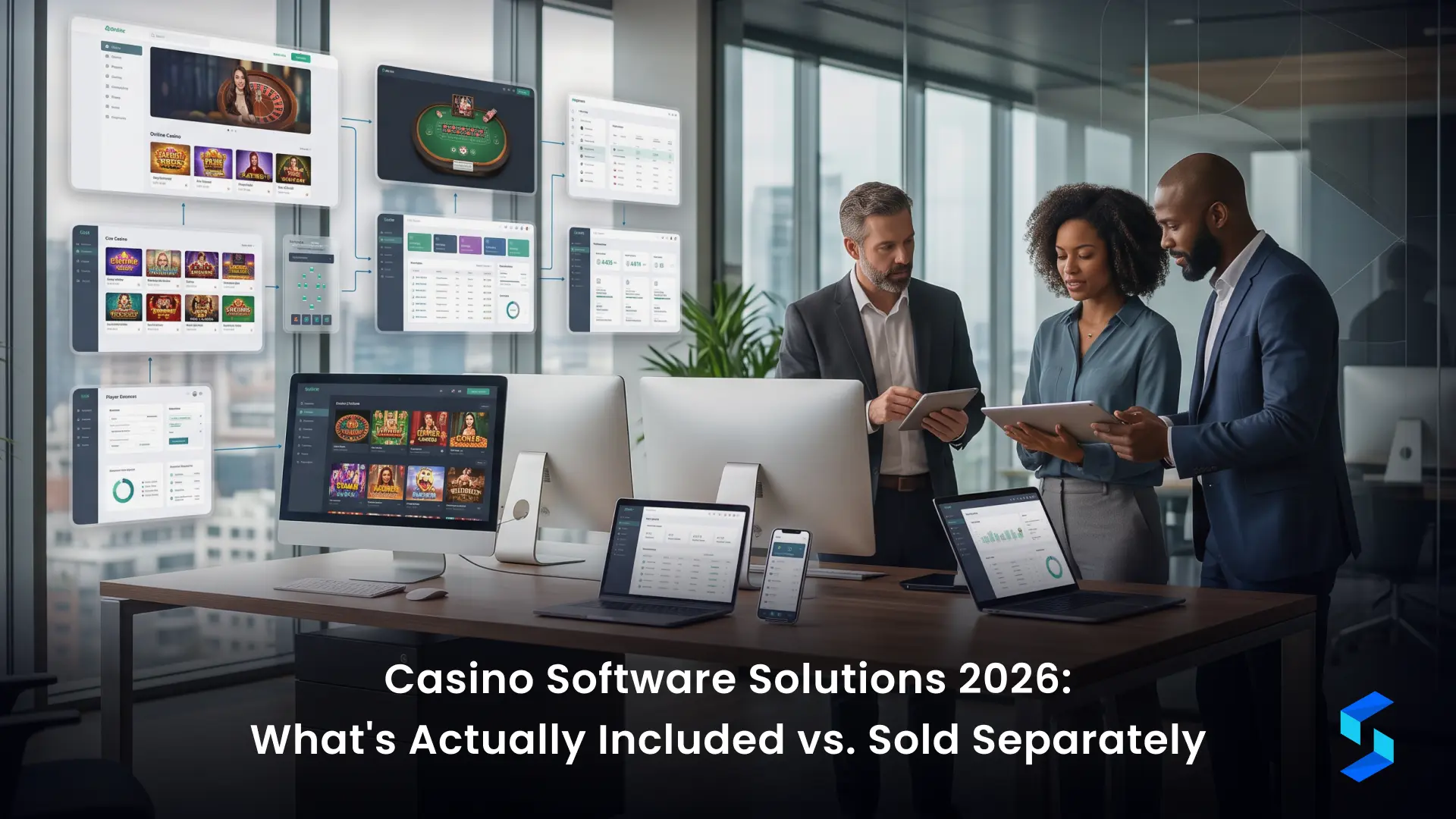
Casino software solutions is a term that covers everything from a complete white-label casino platform to a single game aggregation API and vendors use it to describe all of them. For operators evaluating their options, understanding what actually differentiates one casino software solution from another is the prerequisite to making a decision that doesn’t need to be reversed six months after launch.
This guide covers what casino software solutions include, how to compare them, and what questions separate the platforms that scale from the ones that constrain you.
What Is a Casino Software Solution?
A casino software solution is the technology infrastructure that powers an online casino. At minimum, it covers the game content layer (slots, table games, live dealer), the player account system, the wallet and payment infrastructure, and the back-office admin panel. Complete turnkey solutions add front-end design, licensing, and payment processing. API-only solutions add only the game content connection.
The confusion around the term “casino software solution” comes from this range. A vendor who describes their product as a “complete casino igaming solution” might mean:
- A white-label platform with games, wallet, front-end, license, and payments bundled
- An API aggregation layer that delivers games only, with the operator providing everything else
- A middleware product that sits between an existing platform and a game studio’s content
Clarify exactly which components are included in any vendor’s definition before comparing prices.
Types of Casino Software Solutions in 2026
| Solution Type | What’s Included | What You Provide | Best Fit |
|---|---|---|---|
| White-label turnkey casino | Games, front-end, wallet, PAM, payments, license | Branding, player acquisition, CRM | New operators, fast market entry |
| Casino platform (no license) | Games, front-end, wallet, PAM | Your own license, payment gateways | Operators with existing license |
| Game aggregation API | Game content from multiple studios | Platform, wallet, PAM, front-end, license | Operators adding games to an existing platform |
| Casino-specific PAM + aggregator | Player management + game access | Front-end design, payment gateways | Operators who want to own player data but not build the full stack |
| Custom casino build | Everything, built to spec | Nothing you own all IP | Established operators at significant GGR |
What a Complete Casino Software Solution Should Include
Game Library and Aggregation
A casino software solution’s game library is not just a game count it is the combination of studio diversity, content quality, and aggregation model that matters:
- How many distinct studios does the aggregation layer include?
- Is the game library exclusive or shared across all operators on the platform?
- What is the new game release cadence monthly, quarterly, or less frequent?
- Does the provider include live casino content or is that a separate integration?
The best casino igaming solutions aggregate content from 50–200+ studio partners through a single API integration, covering slots, table games, live dealer, virtual sports, and crash games. Providers who aggregate fewer than 20 studios are likely missing the long-tail content that retains players beyond their initial deposit sessions.
Player Account Management (PAM)
The PAM system is the operational backbone. For casino software solutions, the critical PAM questions are:
- Is the PAM included in the platform fee, or is it a separate commercial arrangement?
- Who owns the player data you, or the platform provider?
- What is the data export mechanism on contract termination?
- Does the PAM support multi-currency, multi-language, and multi-brand under a single operational structure?
Our full breakdown of casino PAM solutions covers this in detail, but the single most important point is data portability an operator who cannot export their player database in a usable format on exit is locked into their software provider regardless of contract terms.
Bonus and Promotion Engine
Casino bonus mechanics are where operators differentiate their retention proposition. A casino software solution’s bonus engine needs to support:
- Welcome bonuses with wagering requirements (configurable by game contribution rate)
- Free spin awards on specific game titles with expiry controls
- Reload bonus mechanics for retention campaigns
- VIP tier management with automated tier upgrade/downgrade logic
- Cashback mechanics configurable by player segment
A bonus engine that requires developer involvement to configure each new promotion is a competitive disadvantage marketing teams need to be able to launch campaigns on hours notice, not weeks.
Live Casino Integration
Live dealer content now accounts for roughly 45% of online casino engagement. Any casino software solution that does not include live casino integration or does not clearly provide an integration path to live casino providers is incomplete for modern casino operations.
For complete coverage of live casino provider selection, our guide on how to choose a live casino software provider covers the evaluation criteria in detail.
Comparing Casino Software Solutions Right Now?
Our team helps operators evaluate, shortlist, and integrate casino platforms across 15+ markets. We can help you find the right fit for your budget and growth trajectory.
Casino Software Solution vs. Casino Platform: The Terminology Difference
These terms are often used interchangeably but signal different product scopes:
- Casino software solution typically implies a broader, more complete product that may include licensing and payments
- Casino platform typically refers to the technology infrastructure layer without necessarily implying licensing coverage
When evaluating vendors, always confirm which components are included regardless of what term they use to describe their product.
How to Compare Casino Software Solutions: The Evaluation Framework
- Step 1 Confirm the component scope: List every component you need (games, PAM, wallet, front-end, license, payments) and confirm which are included, which are optional add-ons, and which you need to source independently.
- Step 2 Evaluate the total cost: Base platform fee + game aggregation share + payment processing margin + any add-on fees = total cost of operating. Most published prices cover only the base fee.
- Step 3 Check the game library quality: Request access to the platform demo environment and evaluate game loading speed, mobile rendering, and live casino interface not just the content catalog.
- Step 4 Verify data portability terms: Get the data export terms in the contract, not in a verbal commitment.
- Step 5 Reference check in your target market: Ask for two client references operating in your geographic target market under the same licensing structure you plan to use.
Casino Software Solution Cost Comparison
| Solution Type | Setup Cost | Ongoing Cost |
|---|---|---|
| White-label casino platform | $10,000–$50,000 | $2,000–$20,000/month + 10–25% GGR |
| Casino igaming platform (no license) | $5,000–$30,000 | $1,000–$10,000/month + game share |
| Game aggregation API only | $2,000–$15,000 | 2–5% GGR per studio or aggregator fee |
| Custom casino build | $80,000–$500,000+ | Infrastructure + team salaries only |
Common Casino Software Solution Mistakes
- Choosing based on game count alone: a platform with 5,000 games but poor mobile rendering and a slow lobby loses players faster than a platform with 1,500 games that loads in under 2 seconds on 4G.
- Ignoring the PAM data architecture: selecting a bundled PAM platform without confirming player data ownership leads to the most expensive igaming infrastructure decision an operator makes, discovered only when they want to change providers.
- Not verifying live casino integration: some casino software solutions claim live casino support but require a separate commercial agreement with a live casino provider that the operator must negotiate independently.
- Launching without testing mobile performance: mobile accounts for 57% of casino GGR in mature markets. A casino software solution that hasn’t been load-tested on mobile at realistic player volumes is not ready for launch.
Final Thoughts: Define the Scope Before You Compare the Prices
The only valid casino software solution price comparison is one where every quoted package includes the same set of components. Build your required component list first, then request quotes against that specification not against each vendor’s default package. The difference between the headline price and the total cost of a live, compliant casino is rarely less than 30%.
Talk to our team about casino software solution evaluation, component scoping, and total cost modelling for your market.