

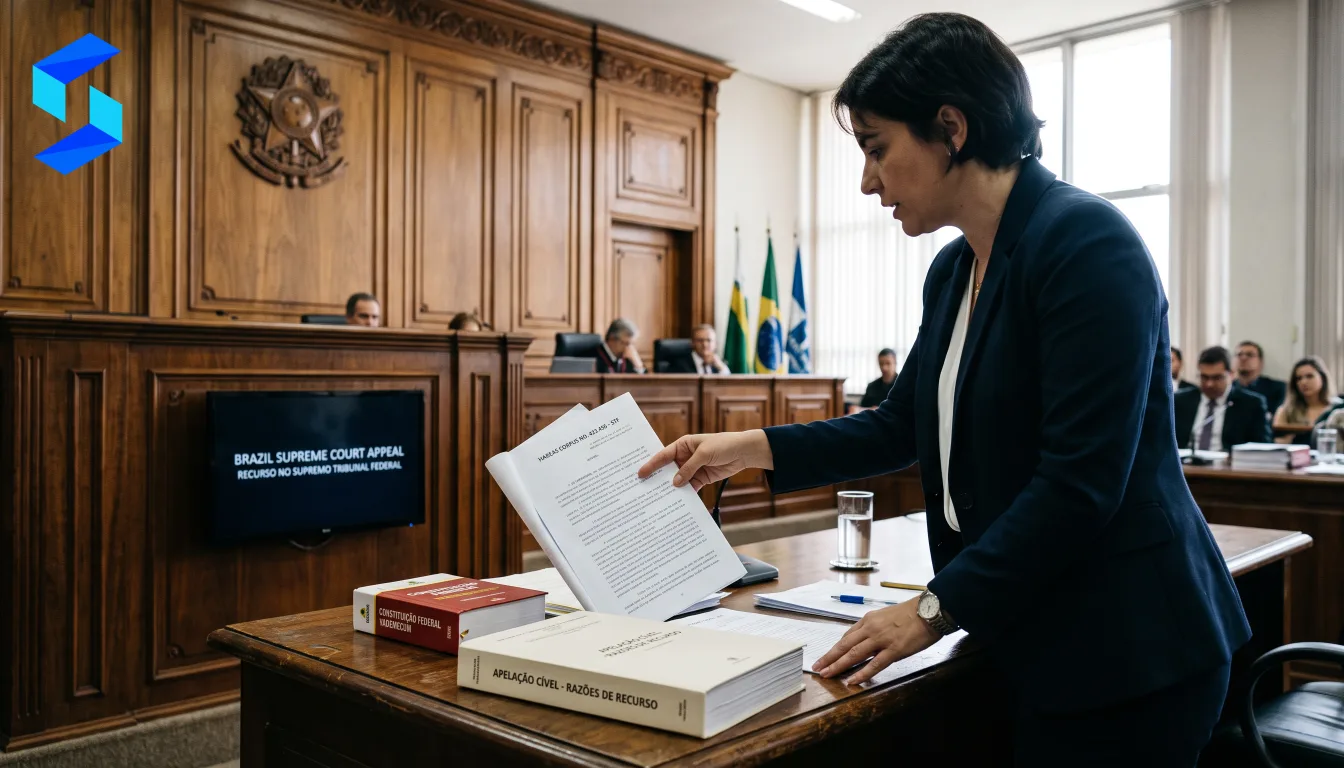
Brazilian gambling industry associations have escalated their fight against the country’s operator ban by filing legal actions with the Supreme Court. On 28 September, the National Association of Games and Lotteries (ANJL) and the Brazilian Institute of Responsible Gaming (IBJR) jointly asked Supreme Court justice Luiz Fux to suspend Provisional Measure 1.394, while Anseja filed a separate action requesting at least 180 days to wind down operations.
Both filings argue that nothing urgent justified the government’s use of a provisional measure to implement the ban. However, the legal actions do not automatically pause enforcement, meaning every shutdown deadline remains in force until the court issues a ruling.
What Provisional Measure 1.394 means for operators
Provisional measures in Brazil are executive instruments that carry immediate force of law, typically reserved for urgent matters requiring swift action. The gambling industry’s challenge centres on whether the government met the constitutional threshold for urgency when issuing the measure that imposed the operator ban.
The ANJL and IBJR’s joint filing to Justice Fux represents a coordinated effort by two of Brazil’s most prominent gambling trade bodies. Anseja’s separate action takes a different approach, focusing specifically on securing a transition period of at least 180 days that would allow operators to exit the market in an orderly fashion rather than face immediate shutdown.
No pause on enforcement pending court decision
The critical detail for licensed operators is that filing these legal challenges does not trigger an automatic stay of execution. Until the Supreme Court reviews the matter and issues a decision, all deadlines and requirements under Provisional Measure 1.394 remain fully enforceable.
This means operators holding Brazilian licences must continue to comply with shutdown timelines and cannot rely on the pending litigation as grounds to delay compliance. The lack of automatic suspension creates immediate operational pressure for companies that were counting on legal intervention to buy additional time.
Industry implications and next steps
The Supreme Court appeals represent the latest chapter in Brazil’s turbulent gambling regulatory saga. The market had been moving toward regulated status, with operators investing heavily in licensing and local infrastructure. The provisional measure’s ban has created uncertainty for both domestic and international operators who committed resources to the Brazilian market.
The outcome of these Supreme Court filings will determine whether operators gain breathing room to challenge the measure’s legal basis or must proceed with immediate wind-down plans. For companies holding Brazilian licences, the priority remains ensuring compliance with current deadlines while monitoring the court’s response to the industry’s constitutional arguments.
The timing of any Supreme Court decision remains unclear, leaving operators in a state of regulatory limbo as they balance legal obligations against the hope of judicial intervention.

