

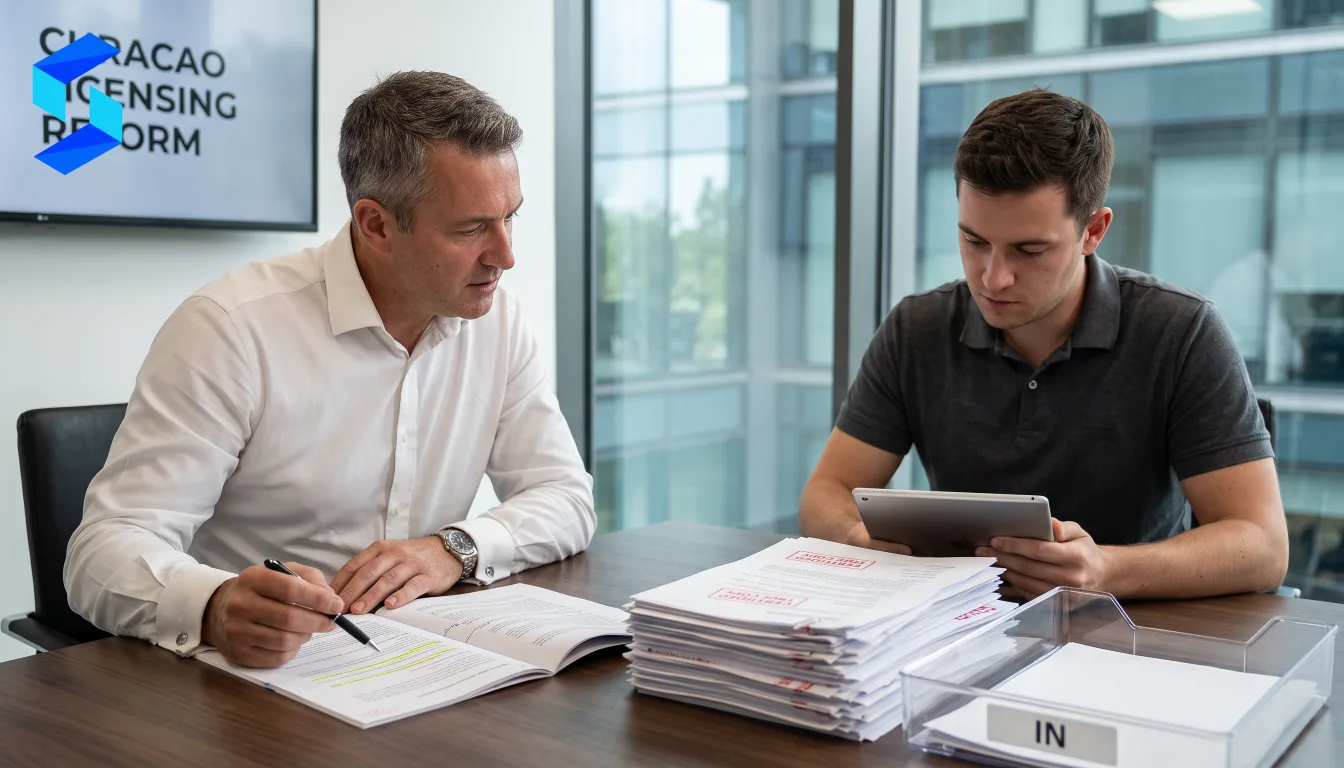
Curaçao’s gaming regulator has published its first Common Questions update, introducing three immediate changes to the licensing process that will affect how operators and platform providers approach compliance in the jurisdiction. While the first two changes simplify documentation requirements, the third fundamentally alters how incomplete applications are handled.
The Curaçao Gaming Authority (CGA) announced that personal and business documents can now be filed in English, Dutch or Papiamentu without translation, though financial statements must remain in English only. Additionally, these documents no longer require certification as true copies unless specifically requested by the CGA.
The third change, however, represents a more significant shift in licensing procedure: open checklist items will no longer prevent the issuance of an indefinite licence. Instead, these items close at the point of licence issuance and then reappear on a separate Supervision checklist.
The Trade-Off Behind Faster Issuance
The updated procedure effectively allows applicants to receive their licence with outstanding compliance items still pending. Rather than holding up the entire licensing process until every requirement is satisfied, the CGA will now issue the licence and transfer incomplete items to ongoing supervision.
This approach accelerates time-to-market for operators and B2B providers seeking Curaçao licensing, but it also means that regulatory scrutiny continues after the licence is granted. Companies will need to maintain active engagement with the CGA’s supervision team to clear items that would previously have been resolved before launch.
Reduced Administrative Burden on Documentation
The elimination of the certified-copies requirement removes a layer of administrative friction that has historically added time and cost to the application process. Applicants no longer need to engage notaries or other certification services for routine business and personal documents, unless the CGA flags specific items for additional verification.
The multilingual filing option also streamlines the process for operators with Dutch or Papiamentu documentation, though the English-only requirement for financial statements maintains consistency in the regulator’s financial review process.
Implications for B2B Providers and Operators
For platform vendors and game suppliers, the changes mean clients can potentially secure Curaçao licences faster, but with the understanding that compliance obligations extend into the operational phase. B2B providers supporting newly licensed operators should anticipate that their clients may be working through supervision checklists while already live in market.
The shift also suggests the CGA is moving toward a more dynamic supervision model, where regulatory compliance is treated as an ongoing relationship rather than a one-time gate. This aligns Curaçao’s approach more closely with other jurisdictions that emphasize continuous monitoring over pre-licensing perfection.
All three changes took effect immediately upon publication of the Common Questions update.

