


Turnkey Gaming Business Scope
We explain what a turnkey gaming business package includes and what stays with you, so operators and founders can plan the launch with a clear split of work.
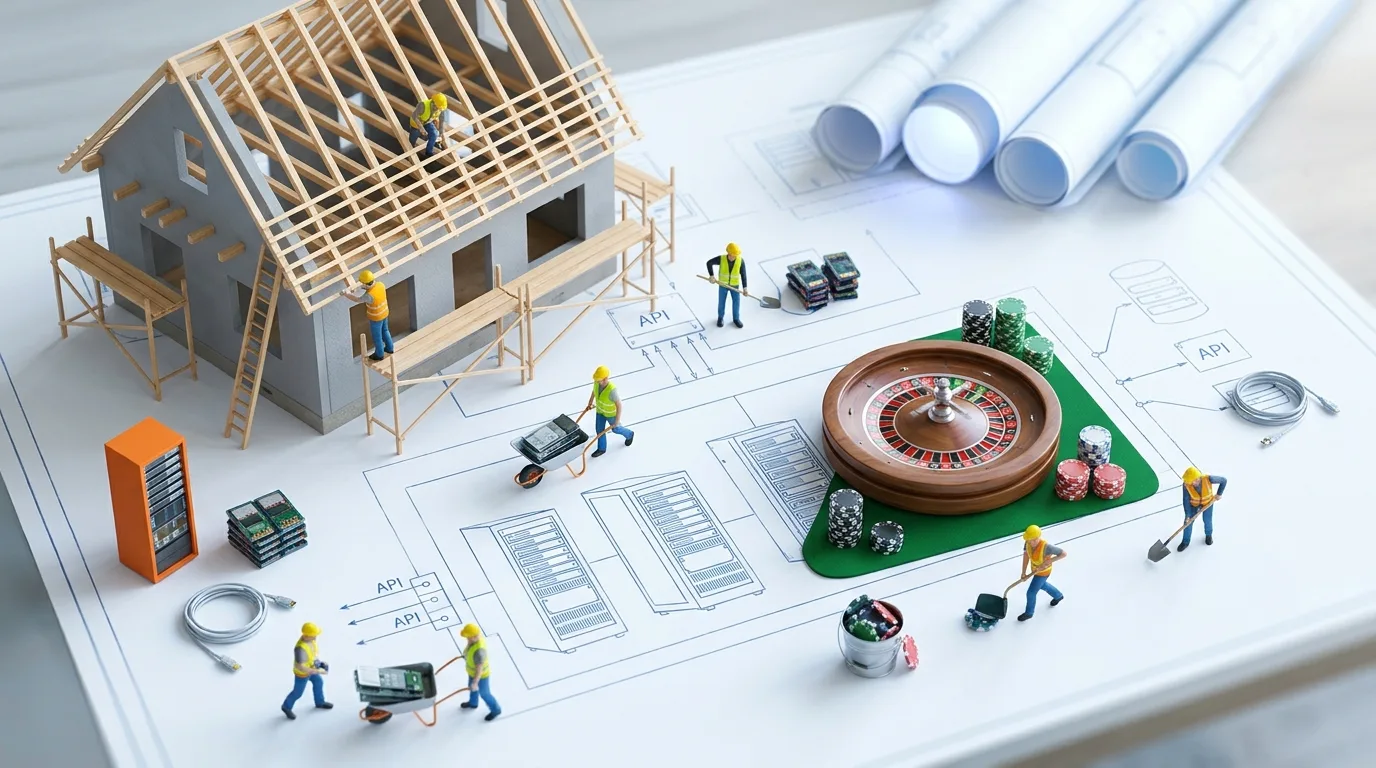
The word turnkey hides where the work really sits
Most disappointment with a turnkey gaming business starts with an assumption nobody wrote down.
Vague scope behind the word turnkey
Two providers can both sell a turnkey package and mean very different things. One may cover the platform, games and back office, while another stops at a login to an empty system. Without a line-by-line list, you find the gap after you have signed.
Hidden work lands on your team
Brand, marketing, player support, payment contracts and compliance can all sit outside the package. Buyers budget for the platform, then find a second project they have no staff for. The launch slips while you hire or outsource what you thought was included.
No clear owner for each decision
When provider and operator each assume the other handles game selection, risk rules or bonus setup, nothing gets decided. Questions pass back and forth by email while the launch waits. A split of responsibilities agreed up front removes most of that.
What the turnkey package hands over
Each item below is written into the scope before work starts, so you know what is delivered and what stays on your side.
Ways to work with us on a turnkey build
Pick the model that matches how much of the product you want us to deliver and how much you want to build yourself.
Turnkey launch
- Standard platform configured to your brand
- Agreed game and payment integrations
- Staging and live environments set up
- Handover session for your team
Turnkey plus custom modules
- Turnkey base as the starting point
- Extra modules scoped and priced separately
- Custom features built against your spec
- Same documentation and handover
Ongoing technical support
- Fixes and maintenance after launch
- Help adding new game providers
- Updates agreed on a request basis
What a turnkey package includes and what you still build
A turnkey gaming business gives you working software, but the licence, the brand and the daily operation stay with you.
Player-facing platform
Registration, login, wallet and account screens that players use from day one.
Back office tools
Admin screens for player management, bonuses, limits and reporting.
Game integration layer
One connection that lets you add games from several providers.
Licence and company setup
The gaming licence, legal entity and regulator reporting belong to the operator.
Brand and acquisition
Your name, design, marketing plan and player sources are your own work.
Operations team
Support, risk checks, fraud review and VIP handling need people on your side.
Payment provider setup
The platform connects to payment methods, but you hold the merchant contracts.
Game provider terms
Technical connection is done together, while commercial terms are agreed by you.
Responsible gaming rules
Tools are available in the platform, and you set the policies your market requires.
Technologies and standards behind a gaming platform
These are the common building blocks of a turnkey platform, and the standards you will be asked about.
REST APIs
Connect the platform to game providers, payments and your own systems.
WebSocket
Pushes live balance, game state and notification updates to players.
OAuth 2.0
Controls access for back office users and partner integrations.
PostgreSQL
Stores player accounts, wallet transactions and game rounds reliably.
Redis
Caches sessions and lobby data to keep pages fast.
Docker
Packages platform services so environments behave the same everywhere.
GLI-19
Common testing standard that regulators reference for interactive gaming systems.
PCI DSS
Security rules that apply wherever card payments are handled.
Licensing and compliance stay on your side of the line
A turnkey package gives you working software, but the licence, the legal entity and the regulator relationship still belong to the operator.
The licence is yours to hold
A turnkey package does not come with a gaming licence for your business. You choose the jurisdiction, apply as the operator and meet the conditions that regulator sets.
Player protection tools must be configured
Limits, self-exclusion and session reminders are features the platform can support, but you decide how they are set and enforced. Your policies need to match what your regulator expects.
Identity and payment checks need your rules
The platform can connect to verification and monitoring services, but your compliance team defines the risk rules and review process. Build these checks to meet the standards in your target market.
Content and data handling vary by market
Game providers, certified content and player data storage can each be restricted by jurisdiction. Check these against your target market before launch rather than after.
From package scope to a live gaming business
The work moves from agreeing what the package covers to launching what you build on top of it.
Define the scope
We list what the turnkey package includes and what stays with you, so nothing is assumed. This covers platform, content, payments and back office.
Set up the platform
The core platform is configured for your brand, markets and currencies. You get a working base to build the rest on.
Connect content and payments
Game content and payment methods are integrated according to your target markets and licence conditions. Your team confirms each provider and route.
Build your own layer
You complete the parts the package leaves open, such as licensing, compliance procedures, marketing and support. We work with your team where the platform needs to connect to them.
Test and launch
The full setup is tested end to end before players are admitted. Launch happens when your checks and your regulator's conditions are met.
At each stage you know what is delivered, what is still open and who on your side owns it.
Turnkey gaming business and RNG questions answered
Short answers to the questions buyers ask most, including the two RNG searches people run most often.
What does rng mean in gaming?+
RNG stands for random number generator, the software that produces unpredictable results in a game. In casino games it decides things like where a slot reel stops or which card comes next. Because outcomes come from the RNG and not from the player or the operator, its quality and testing matter a great deal for fairness.
What is rng in gaming?+
RNG in gaming is the random number generator, an algorithm that creates the random outcomes a game relies on. Slots, roulette, blackjack and many other titles use it for every spin, draw or deal. Players cannot predict or influence the results, which is why regulators in many markets ask for independent testing of it.
What does a turnkey gaming business package include?+
A turnkey package usually gives you a working platform you can launch on rather than a set of parts to assemble. That commonly means the core software, a game or betting offering, and back-office tools. The exact scope differs between providers and contracts, so ask for a written list of what is included before you commit.
What do I still have to build with a turnkey package?+
You still build the business around the software. That normally covers your licence and legal setup, your brand, payment arrangements, marketing, player support and day-to-day risk and compliance work. Some providers help with parts of this, but treat each one as your responsibility until the agreement says otherwise.
Is a turnkey gaming business the same as a white label?+
No, though the two overlap. A turnkey package is usually a platform set up for you to run as your own operation, while a white label often means a branded version of a provider's existing product. The difference shows up in who holds the licence, who controls the product and how much you can change.
Does the RNG in my games need to be certified?+
In many regulated markets, yes. Regulators commonly require the RNG to be tested by an independent lab before games go live, but the rules vary by jurisdiction. Check what your licensing authority asks for, and confirm with your provider which games already carry certification and which would need testing.
Know what is included before you commit
Tell us what you plan to launch and we will show which parts of a turnkey gaming package cover it and which parts your team still builds. You leave with a clear split between what you buy and what you own.
Talk to Sourcecodelab
