

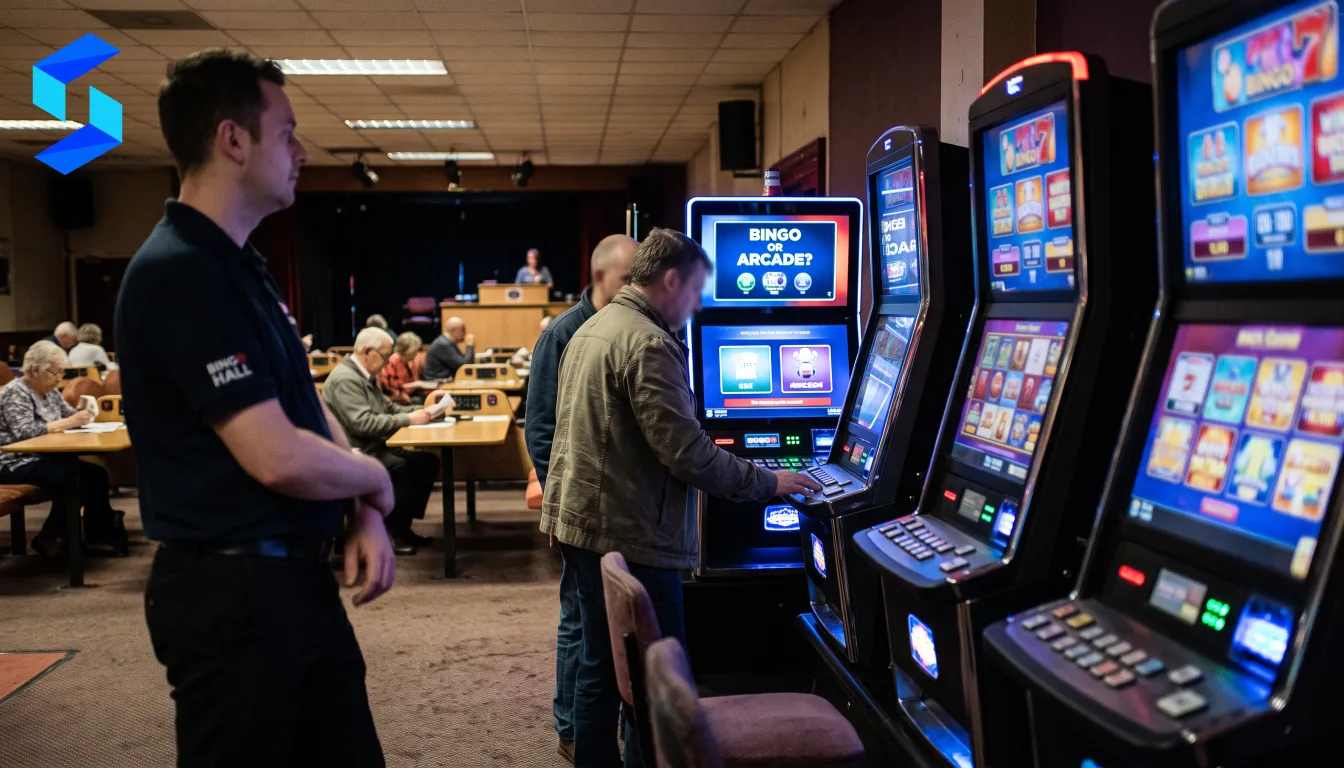
Gaming machines now generate almost twice as much revenue as bingo in UK licensed bingo premises, with some high-street venues deriving virtually nothing from bingo itself while operating under bingo licences, raising questions about when a bingo hall is really an adult gaming centre.
According to the latest Gambling Commission figures, gaming machines generated £461.7 million in gross gambling yield for bingo operators during the year to March 2026, compared with £242.1 million from bingo games. Machines therefore provided almost two-thirds of the sector’s combined £703.8 million in GGY.
The divergence has become increasingly pronounced. Bingo premises machine GGY has risen from approximately £293 million in 2019-20 to £462 million in 2025-26, an increase of 57%. Revenue from Category B machines climbed from approximately £197 million to £361 million over the same period, accounting for approximately 78% of bingo machine GGY in the latest financial year.
Two Different Business Models
The aggregate data conceals a fundamental change in the sector’s composition. A growing number of premises carry bingo licences while appearing and operating much more like adult gaming centres (AGCs).
Data supplied by the Gambling Commission shows that among operators running mainly or exclusively high-street bingo premises, less than 1% of GGY came from bingo games, with gaming machines generating the other 99%. That compares with bingo contributing 51% of GGY for operators focused on traditional bingo clubs and 55% for operators concentrated in holiday parks.
Of Merkur Slots’ 340 venues listed on the Gambling Commission website, 227 were classed as bingo venues and only 106 as AGCs, despite the “bingo” venues appearing to look like and function as AGCs.
The Substantive Facilities Problem
Under Gambling Commission social responsibility code provision 9.1.2, machines may be made available in licensed bingo premises only where “substantive facilities” for non-remote bingo are also available. However, what counts as substantive is not defined.
The Gambling Act does not specify how much floor space must be used for bingo, how many customers must be able to play it or what proportion of revenue should come from the game. The Commission deliberately resisted a universal numerical definition to avoid an inflexible approach.
That flexibility has accommodated traditional clubs, holiday parks and newer formats, but has also created room for premises in which bingo provision is technically present but economically insignificant. Electronic bingo terminals complicate matters further, as the same tablet can offer both bingo and gaming-machine content.
Regulatory Implications
The government acknowledged the problem in its October 2025 consultation on bingo licensing, noting a “growing number” of licensed bingo premises that predominantly offered gaming machines and were difficult to distinguish from AGCs.
The regulatory identity of premises affects its customer proposition, presentation and the multi-operator self-exclusion scheme that applies. It can also influence how local licensing authorities assess the venue and the surrounding area’s gambling risk profile. A machine-led premises operating under a bingo licence can therefore occupy a different regulatory position than an AGC offering a similar customer experience.
One gambling harm campaigner suggested bingo was a “trojan horse” for gaming machine operations, highlighting the sector’s growing identity crisis.

