


Our player-facing guide, winning slot machine strategy tips, already explains RTP and volatility to players. This piece is the studio-side companion — what to actually optimise for when designing the math model.
RTP and Volatility Are Two Different Levers
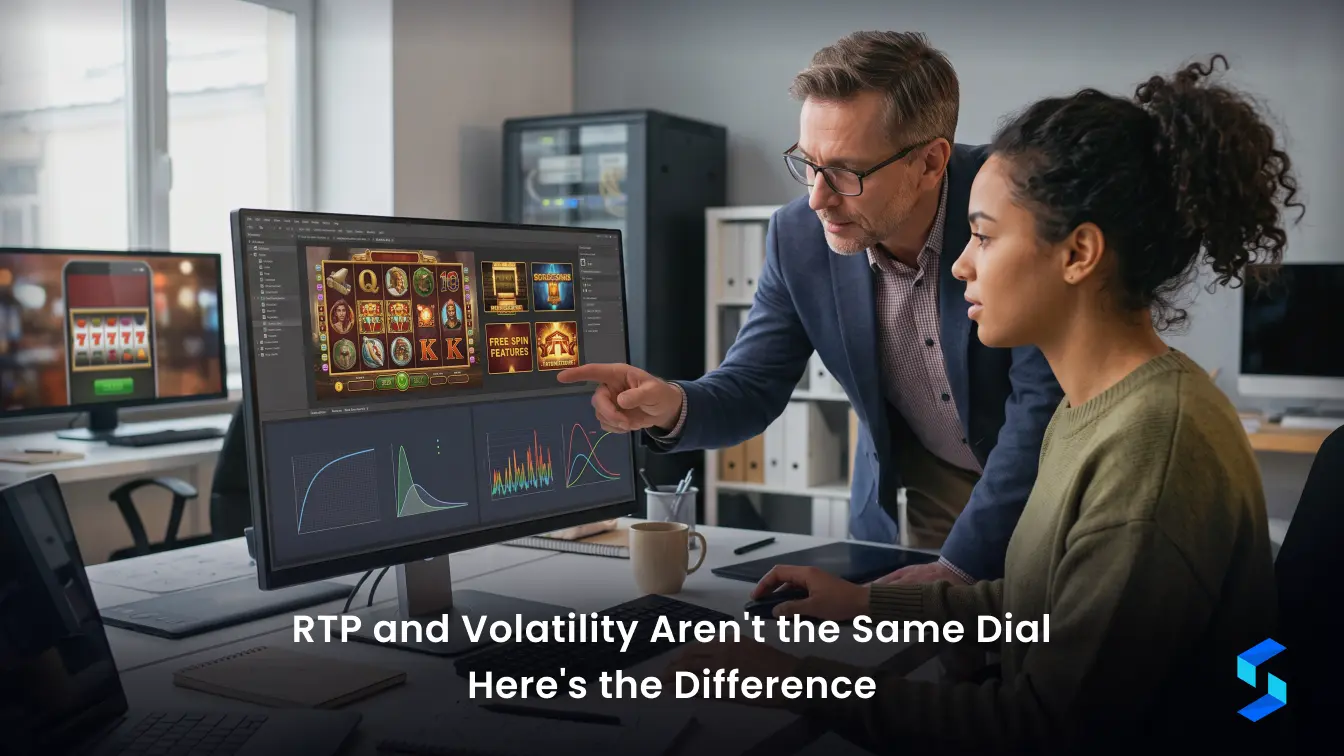
Return to Player (RTP) is the theoretical percentage of all wagered money a game returns to players over a very large number of spins. Volatility (or variance) describes how that return is distributed — a low-volatility game pays out small wins frequently, while a high-volatility game pays out rarely but with much larger wins when it does. Two games can share an identical RTP figure and feel completely different to play because of volatility alone, which is exactly why player reviews of two similarly-rated games often disagree sharply on whether a title “pays well.”
How Studios Actually Tune These Settings
- RTP is typically set within a jurisdiction-approved range, then verified through millions of simulated spins during RNG certification
- Volatility is tuned through paytable design — symbol frequency, bonus trigger rates, and multiplier distribution — rather than through the RTP figure itself
- Bonus feature frequency and free-spin multiplier ranges are usually where a studio has the most creative room to differentiate, since RTP and jurisdiction limits constrain the rest
Comparison Table: Volatility Profiles and Their Use Cases
| Volatility | Player Experience | Best Fit |
|---|---|---|
| Low | Frequent small wins, longer session length per deposit | Casual/recreational players, retention-focused titles |
| Medium | Balanced mix of frequency and win size | General-purpose catalogue titles |
| High | Rare but large wins, longer losing streaks between hits | Players seeking big-win potential, often paired with progressive jackpots |
Designing or auditing a slot math model?
Why This Matters for Retention, Not Just Compliance
Volatility has a direct relationship with session length and bankroll survival at a given bet size — a mismatch between a game’s volatility and its target audience’s typical bet size and session length is a common, avoidable reason a mathematically sound game still underperforms commercially.
Common Design Mistakes Studios Make
- Setting volatility based on what’s trending in the market rather than what fits the specific audience the game is being built for
- Under-testing bonus feature frequency, so the actual player experience of hitting a bonus round doesn’t match what the marketing materials imply
- Treating RTP as the only lever regulators or players care about, when volatility is what most directly shapes how a session actually feels to play
- Skipping internal simulation at scale and relying solely on the certification lab’s testing to catch math-model errors, which turns a design flaw into an expensive resubmission
How Volatility Choices Interact With Jackpot Design
High-volatility titles are frequently paired with progressive jackpots specifically because the two mechanics reinforce the same player psychology — long stretches without a hit, offset by the possibility of a genuinely transformative win. A low-volatility game paired with a large progressive jackpot tends to feel mismatched to players, since the frequent small wins don’t build the same anticipation that makes a rare, large jackpot payout feel earned.
Testing Methodology: What Actually Gets Verified
Before submission to a certification lab, studios typically run the math model through ten million or more simulated spins internally to confirm the actual RTP matches the declared figure across the full range of bonus features and edge cases, catching design flaws before they become a certification delay.
A Quick Framework for Setting Volatility on a New Title
- Identify the target audience’s typical bet size and session length before touching the paytable
- Choose a volatility band that matches that audience, not the volatility currently trending in the market
- Simulate the design internally at scale before submitting to certification, to catch mismatches between intended and actual player experience
- Review actual post-launch player data against the design intent, and treat that as an input for the next title, not just this one