
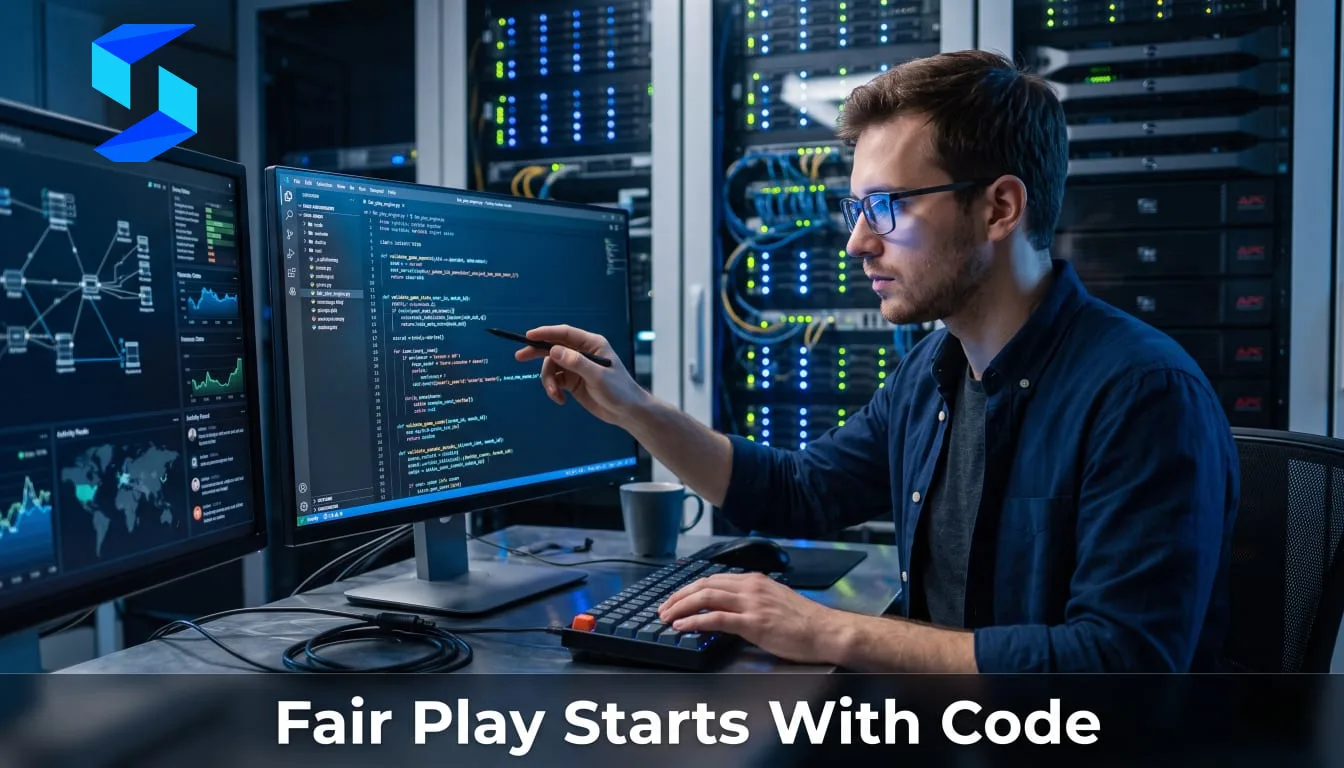
Random Number Generation sits at the core of every casino game outcome. It determines whether a slot reel stops on a jackpot or a player’s card hand wins. Without properly implemented RNG, operators face regulatory penalties, player distrust, and potential revenue loss from disputed outcomes.
Understanding RNG architecture is not optional for operators building or evaluating platforms. It directly impacts compliance costs, integration timelines, and operational risk. iGaming Software Development projects that neglect RNG requirements from the start typically face expensive rework during certification audits.
At a Glance
- RNG algorithms generate unpredictable sequences that determine all game outcomes in casino platforms
- Certification from accredited labs is mandatory in most jurisdictions before operators can launch games
- Implementation errors cost operators an average 8-12 weeks in delayed launches and re-audit fees
Understanding Random Number Generation In Gaming
Every spin, card draw, or dice roll depends on a number generator producing values that cannot be predicted or manipulated by players or operators. RNG is the core technology behind unpredictable outcomes in casino games, vital for fairness and regulatory compliance.
The technology divides into two categories. True Random Number Generators extract entropy from physical phenomena like atmospheric noise or radioactive decay. Pseudo-Random Number Generators use mathematical algorithms seeded by an initial value to produce sequences that appear random but are deterministic.
Most casino platforms use pseudo-random generators. They offer speed, reproducibility for audit trails, and sufficient unpredictability when properly implemented. A well-designed PRNG passes statistical tests that verify its output distribution matches true randomness within acceptable margins.
Operators choosing between in-house development and third-party RNG modules must evaluate certification costs, integration complexity, and ongoing audit requirements. RNG Meaning Gaming: How Random Number Generators Work provides detailed comparison data on implementation approaches and their long-term cost implications.
Ensuring RNG Integrity Through Testing
Independent audits and certifications verify that RNG algorithms function correctly and produce statistically random results, safeguarding operator reputation. Labs like iTech Labs, eCOGRA, and GLI run millions of test cycles to detect patterns, bias, or predictability in number sequences.
Testing protocols examine cycle length, distribution uniformity, and correlation between consecutive outputs. An RNG that passes these tests receives a certificate valid for a specific implementation and version. Any code changes require re-certification, adding weeks to deployment schedules.
Operators who skip certification or use uncertified RNG libraries face license suspension in regulated markets. Initial certification typically runs between $15,000 and $40,000 depending on jurisdiction and game complexity. Ongoing annual audits add another $8,000 to $20,000 to operational budgets.
2^19937
Mersenne Twister period length
10M+
Test cycles in standard audits
72hrs
Typical certification turnaround
Platform providers who bundle pre-certified RNG modules reduce time to market but limit customization options. Operators building custom game mechanics often need bespoke RNG implementations that require full certification cycles before launch.
The Technical Mechanism Of Casino RNG
Casino RNG systems use complex algorithms, often seeded by external entropy sources, to generate sequences of numbers that determine game results. The seed value initializes the algorithm. Each subsequent call produces the next number in a deterministic but unpredictable sequence.
Common algorithms include Mersenne Twister, Xorshift, and cryptographic generators like Fortuna. Mersenne Twister offers a period of 2^19937-1, meaning it produces that many numbers before repeating. This length exceeds the total number of game rounds any platform will ever process.
Seed generation pulls entropy from system clocks, hardware noise, or dedicated entropy pools. Weak seeding creates predictable patterns that sophisticated players can exploit. RNG in iGaming: What B2B Providers Must Get Right documents three operator cases where poor seeding led to player advantage and revenue loss.
The generated number then maps to a game outcome through modulo operations or range scaling. A slot with 64 reel positions might take the RNG output modulo 64 to determine where each reel stops. Improper mapping introduces bias toward certain outcomes.
“Operators who treat RNG as a black box discover problems only after player complaints or audit failures force expensive platform rewrites.”
– Source Code Lab
Server-side RNG placement is mandatory for regulated platforms. Client-side generation allows manipulation through modified game clients or memory editing tools. The server generates the outcome, records it in audit logs, then transmits results to the client for display.
Latency between RNG call and result display matters for player experience. Networks with 200ms+ latency make real-time games feel sluggish. Operators targeting regions with poor connectivity need optimized RNG architectures that pre-generate outcome batches without compromising unpredictability.
Cryptographic RNGs add computational overhead but provide security properties that standard PRNGs lack. They resist state compromise attacks where an attacker who learns the internal state can predict future outputs. High-stakes games justify this extra processing cost.
Why RNG Is Crucial For Casino Operations
Proper RNG implementation builds player trust, prevents fraud, and meets strict jurisdictional requirements for licensed operators. A single publicized RNG failure destroys years of brand equity and triggers regulatory investigations that can suspend operations.
Players who suspect outcome manipulation stop depositing and warn others through forums and social media. Operator reputation damage from RNG scandals typically reduces new player acquisition by 40-60% for 6-12 months after the incident becomes public.
Does RNG protect operators from bonus abuse? Yes, when combined with proper game math. Bonus hunters seek games with exploitable patterns or predictable outcomes. Certified RNG prevents pattern exploitation, but operators still need rate limiting and behavioral analysis to stop coordinated abuse.
Can operators adjust RNG to control payout rates? No, not without violating certification. Payout rates depend on game math and symbol weighting, not RNG manipulation. Regulators require that RTP percentages match certified values, and any deviation triggers compliance action.
What happens when RNG certification expires? Operators must remove affected games from live environments until re-certification completes. Players in mid-session receive forced disconnects, and unresolved bets require manual resolution. The operational disruption costs $5,000-$15,000 per day in lost revenue and support overhead.
Jurisdictional requirements vary significantly. Malta requires monthly RNG reports submitted to the MGA. UK operators need annual certification renewals with full statistical analysis. Curacao accepts one-time certification but requires operators to maintain audit logs for five years. Vixio Research & Regulatory Intelligence tracks these requirements across 40+ jurisdictions.
Integration with game development workflows determines how quickly operators can launch new titles. Platforms with modular RNG architectures allow game developers to call certified libraries without touching core RNG code. Monolithic systems require full re-certification for every game update.
Fraud prevention extends beyond player-facing fairness. Internal controls prevent rogue developers or support staff from predicting outcomes or manipulating results. Role-based access controls, code signing, and tamper detection logs protect RNG integrity from insider threats.
Disaster recovery plans must account for RNG state preservation. If a server crashes mid-game, operators need to restore exact RNG state to resolve in-progress bets fairly. State backup mechanisms add complexity but prevent disputes that cost more in arbitration than the technical investment.
Start With Certified RNG Architecture
Source Code Lab builds casino platforms with pre-certified RNG modules that pass regulatory audits in 20+ jurisdictions, cutting your time to market by 8-12 weeks.
Key Takeaways
RNG technology determines all casino game outcomes through algorithms that produce unpredictable number sequences, making proper implementation non-negotiable for licensed operators.
Certification from accredited testing labs costs $15,000-$40,000 initially and requires annual renewals, but skipping this step risks license suspension and player trust collapse.
Operators who build platforms with modular, pre-certified RNG architectures reduce launch delays by 8-12 weeks and avoid expensive rework during regulatory audits.
Related Reading
Provably Fair Casino Games: Development Guide for Operators in 2026 →
Casino NFT Games Development: What Operators Need to Know in 2026 →
Build A Physics-Based Casino Game: Unity Development Guide →
Build Compliant Casino Platforms Faster
Source Code Lab delivers turnkey casino solutions with certified RNG, complete audit trails, and regulatory documentation ready for submission in your target jurisdiction.