

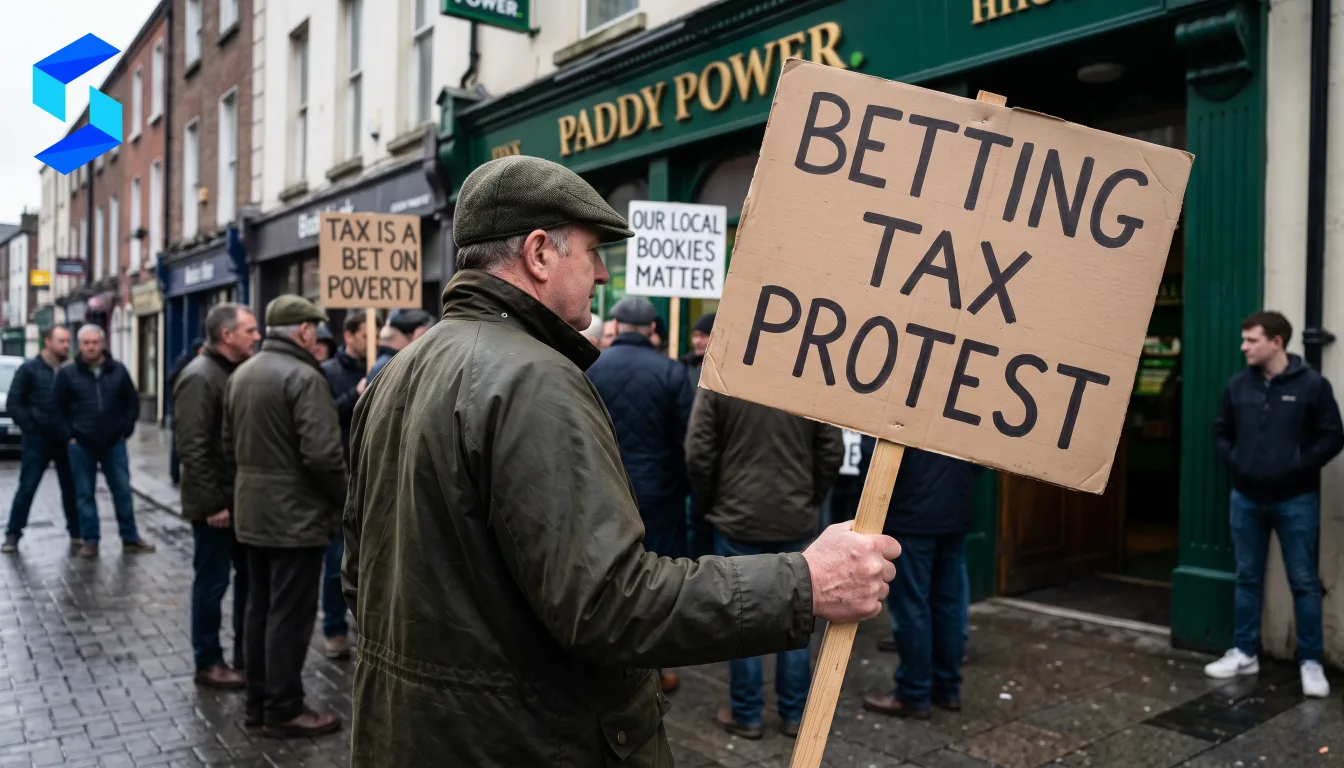
Ireland is preparing to increase its betting tax from 1% to 2%, prompting urgent warnings from bookmakers who say the move will trigger widespread shop closures and reduced customer value. The proposed doubling of the tax rate mirrors a 2019 increase that operators claim led to the closure of 222 betting shops across the country.
The International Betting Association (IBA) has thrown its support behind Irish operators, warning that every euro of additional cost imposed on operators will ultimately be recovered by reducing what customers receive in return.
History Repeating: The 2019 Precedent
When Ireland last doubled its betting tax in 2019, also from 1% to 2%, the industry saw 222 betting shops close their doors. However, the direct causation remains contested. The closures coincided with a broader industry shift toward online betting, making it difficult to isolate the tax impact from structural market changes that were already underway.
The ambiguity around those closures has not stopped operators from citing them as evidence of what lies ahead if the government proceeds with another tax increase.
Major Operators Already Scaling Back
The tax debate comes at a time when major operators are already announcing significant retrenchment in the Irish and UK markets. Entain revealed in April that it plans to close a third of its Ladbrokes shops, while Flutter is considering shuttering up to 100 Paddy Power locations across Ireland and the UK.
These planned closures suggest the retail betting sector is under pressure from multiple directions, with tax policy representing just one of several headwinds facing brick-and-mortar operations.
Industry Warns of Customer Impact
The IBA’s intervention highlights a key industry argument: that betting taxes are not absorbed by operators but instead passed through to customers in the form of reduced odds, lower bonuses, or diminished service quality. This pass-through effect means tax increases intended to generate government revenue may ultimately degrade the customer experience while failing to improve operator margins.
For B2B platform providers and software vendors serving the Irish market, the proposed tax increase represents another variable in an already complex regulatory environment. Operators facing margin pressure from tax increases may seek more cost-effective platform solutions or demand additional features that help them maintain competitiveness despite higher tax burdens.
The timing and final details of the proposed tax increase have not been confirmed, but the industry response suggests operators view the measure as a significant threat to an already challenged retail betting sector.

