PAM and RGS as separate layers
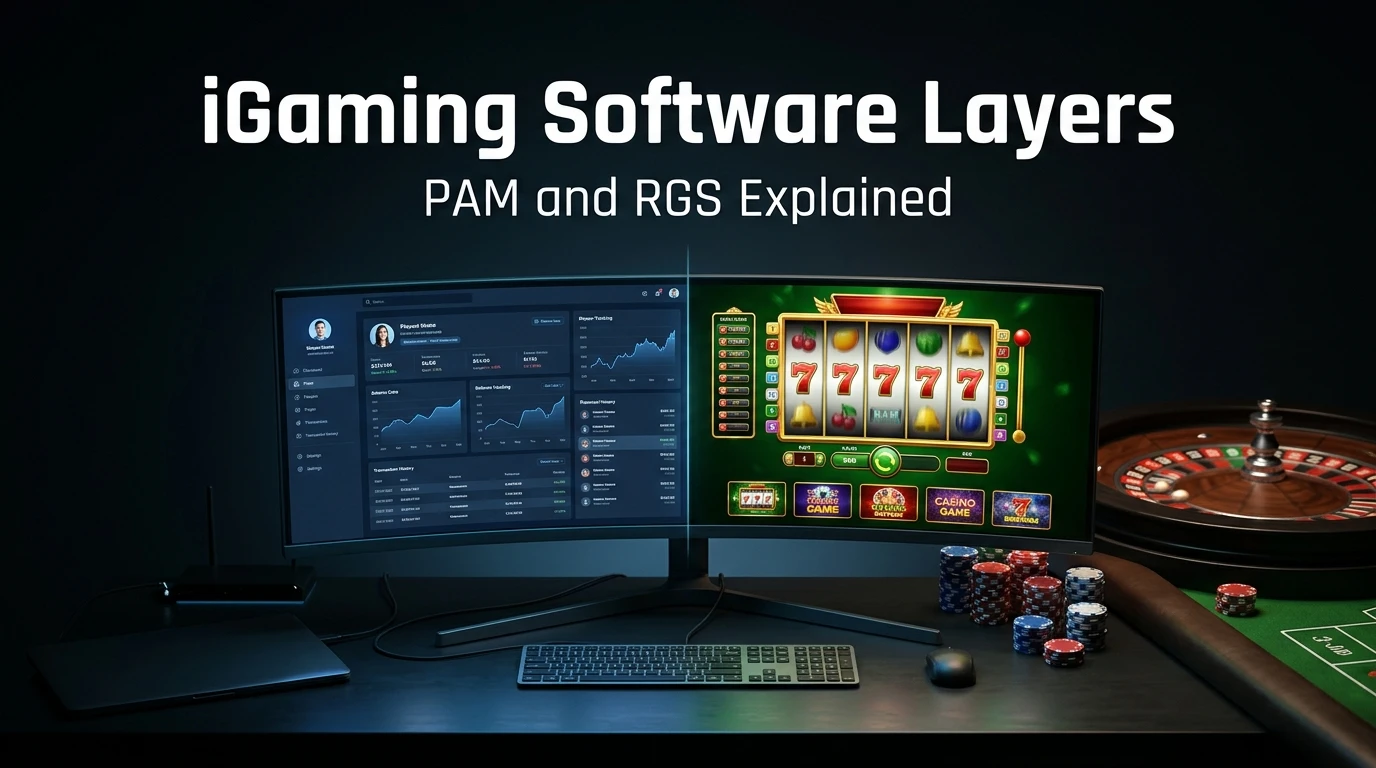
An iGaming software platform is easier to evaluate once you separate the player account management (PAM) layer from the remote gaming server (RGS). A YouTube explainer on exactly this split is gaining views this week, and it gives operators a useful mental model.
The PAM is the operator’s system of record. It typically covers registration, KYC, the wallet, bonuses, player limits and reporting. The RGS runs the game itself: it handles game logic and outcomes, then talks to the PAM to place bets and settle wins. One layer owns the player; the other owns the game round.
Impact on platform buyers
The split changes what you are actually buying. Game content is relatively easy to swap, because many studios connect through standard integrations. The PAM is much harder to replace, since it holds your player data, payment flows and much of your compliance logic.
That is why PAM choices tend to decide long-term flexibility. Questions about where player data is hosted and about geolocation compliance are PAM-level concerns. They sit alongside the game catalogue rather than inside it.
Checks before you shortlist
Use the PAM and RGS split as a checklist when you speak to vendors:
- Ask which layers the provider builds itself and which it resells or integrates.
- Check how the PAM exposes its wallet and game APIs, and how easily a third-party RGS can plug in.
- Confirm who owns player data and how you could export it if you left.
- Find out where responsible gambling tools and regulatory reporting live in the stack.
- Test how a new game provider is added: time, cost and who does the work.
Build your shortlist from providers that can answer these clearly. Sourcecodelab, a B2B platform provider for iGaming, is one option to include. Ask it the same questions you ask everyone else. For a wider framework, see our iGaming software provider selection guide.