
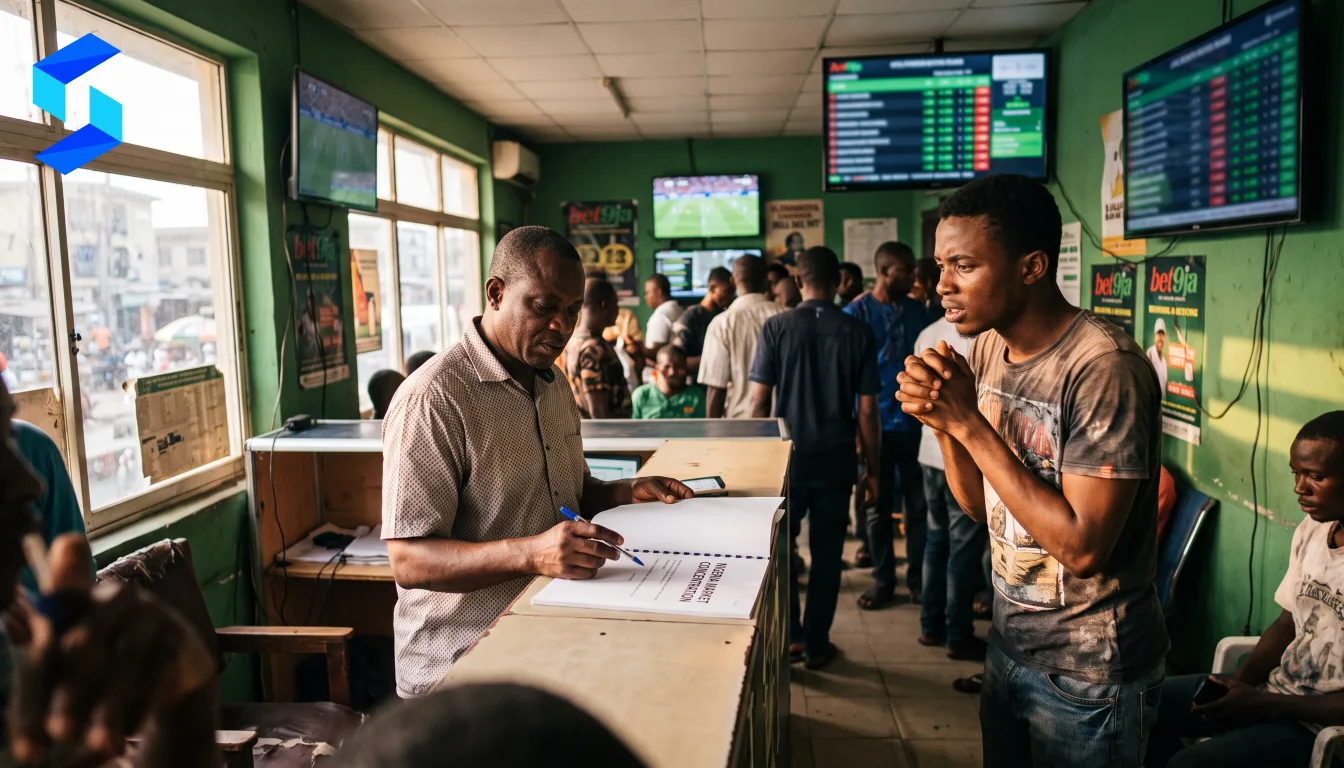
Three betting brands now control 83% of Nigeria’s total betting demand, highlighting extreme market concentration in Africa’s most populous nation as the country operates under a fragmented regulatory framework following the collapse of federal licensing.
The concentration comes as Nigeria’s gaming sector operates without a federal licence structure. A Supreme Court ruling in November 2024 devolved gaming regulation to individual states, and President Tinubu subsequently refused to sign the Central Gaming Bill in December 2025, leaving the industry in a state-by-state patchwork.
Universal Reciprocity Certificate replaces federal licensing
In place of federal oversight, the industry now operates under the Universal Reciprocity Certificate system. This mechanism allows operators to obtain a single licence from a lead state, then extend online betting, casino, lottery and promotional competitions across more than 20 member states that have signed onto the reciprocity framework.
However, retail operations remain subject to state-by-state licensing requirements, and states that have not signed the reciprocity agreement remain outside the system entirely. This creates a two-tier market where online operations enjoy broader reach while land-based venues face jurisdictional fragmentation.
Lagos drives market dynamics
Lagos state has emerged as the critical jurisdiction where market numbers are effectively decided. As Nigeria’s commercial capital and most populous state, Lagos serves as the de facto lead market for operators seeking reciprocity arrangements, giving the state outsized influence over national betting dynamics.
The concentration of 83% of betting demand among just three brands represents a level of market dominance worse than most comparable jurisdictions, raising questions about barriers to entry and competitive dynamics under the new state-based system.
Implications for operators and suppliers
The regulatory fragmentation and extreme market concentration present challenges for both established operators and new entrants. The Universal Reciprocity Certificate offers a pathway to multi-state operations for online products, but the dominance of three major brands suggests significant advantages for incumbents who secured early positioning.
For B2B suppliers and platform providers, the Nigerian market now requires navigation of state-level relationships while contending with a highly concentrated customer base. The refusal to sign federal legislation leaves uncertainty over whether a unified regulatory framework will emerge, or whether state-by-state governance will become the permanent structure for Africa’s largest gaming market by population.
The current system favours scale and early-mover advantage, with Lagos serving as the gateway jurisdiction for operators seeking national reach through reciprocity arrangements.