

Thinking of launching your own fantasy sports platform? You’re not alone—the opportunity has never been bigger. Fantasy sports platforms have transformed into a massive global market where millions of users build teams, compete in real-time, and invest real capital. The industry is accelerating, with the global market projected to hit $71.2 billion by 2030, growing at a rapid 13.8% CAGR.
With rising smartphone penetration, live sports streaming, and seamless digital payments, the “perfect storm” for growth is here. In this guide, you’ll learn exactly what it takes to build a successful platform, from must-have features to tech stack selection and pricing.
Types of Fantasy Sports Platforms & Business Models
,%20Season-Long%20leagues,%20and%20White%20Label%20platforms.webp)
Success begins with understanding the gameplay experiences and technical demands of different platform types. Equally important is choosing a model that aligns with your revenue goals.
1. Daily Fantasy Sports (DFS) Platforms
DFS platforms like DraftKings and FanDuel offer short-term contests (daily or weekly). This provides immediate results and appeals to users seeking high-frequency engagement. The market is robust, with niche players like Underdog Fantasy reaching valuations of $485 million in 2022.
2. Season-Long Fantasy Sports Platforms
These cater to traditional enthusiasts who manage teams over an entire season. Users draft teams at the start and make strategic trades and lineup changes over months. Platforms like ESPN and Yahoo have built massive, loyal user bases using this format.
3. Monetization Models
- Entry Fees: Charging users to join contests with cash prize pools.
- Freemium Model: Basic features are free; advanced analytics or content are paid.
- In-App Advertising: Generating revenue through targeted brand sponsorships.
- Subscription Model: Recurring fees for exclusive, high-value data and premium drafting tools.
Key Features of a Fantasy Sports Platform
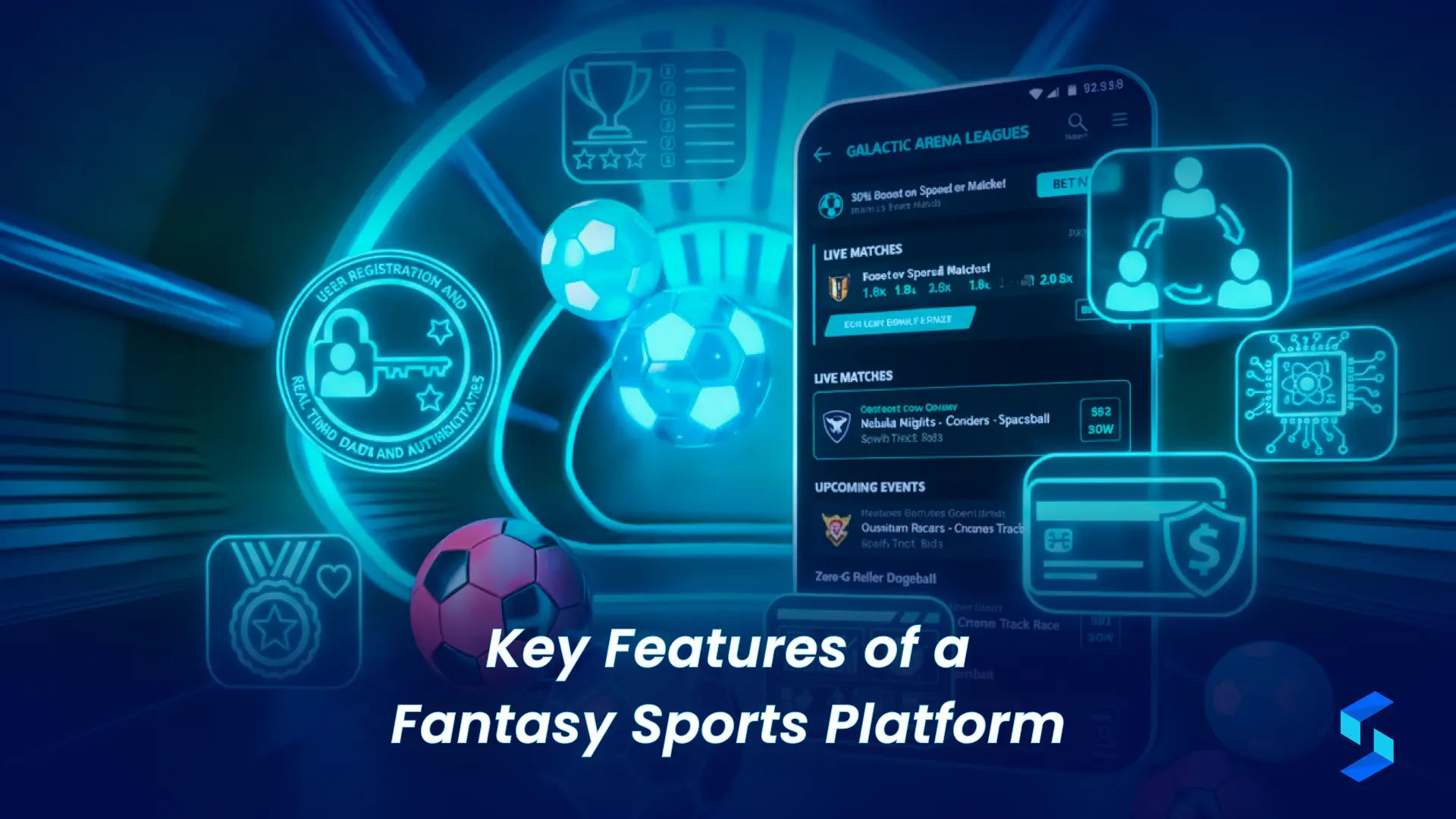
To keep users coming back, your platform must be robust and user-centric. Below is the essential breakdown:
- Real-Time Data: Integration with APIs like SportRadar or Stats Perform via WebSockets ensures millisecond-level updates for live scores.
- Drafting Tools: Intuitive drag-and-drop builders and AI-powered suggestions help users optimize their lineups strategically.
- Security & Compliance: Social logins (Google, Apple ID), 2FA, and biometric access ensure a frictionless yet secure onboarding process.
- Payment Integration: PCI-DSS compliant gateways (Stripe, Coinbase Commerce) and cryptocurrency options for global reach.
- Gamification Layer: Daily missions, XP-based leveling, and achievement badges drive long-term player retention.
Development Costs Breakdown
Basic MVP
Cost: $20,000 – $50,000
Timeline: 6–8 Weeks
Ideal for testing market viability.
Intermediate App
Cost: $50,000 – $100,000
Timeline: 8–12 Weeks
Includes real-time APIs and social tools.
Advanced/Enterprise
Cost: $100,000 – $250,000+
Timeline: 12–20 Weeks
Multi-sport, AI, and Blockchain integrated.
Choosing the Right Tech Stack

- Frontend: React Native or Flutter for a high-performance single codebase across iOS and Android.
- Backend: Node.js + Express (high concurrency) or Django (for robust security).
- Real-Time: Socket.IO or WebSockets for live draft rooms and chat.
- Databases: MongoDB for dynamic game data and Redis for ultra-fast caching.
- Infrastructure: AWS/GCP with Docker & Kubernetes for automated scaling during peak traffic.
Why Choose Source Code Lab?
Building a platform requires understanding the iGaming ecosystem and anticipating user behavior. Source Code Lab offers end-to-end development—from high-security KYC integration to real-time analytics and 24/7 technical support.
Frequently Asked Questions
Is fantasy sports legal in all regions?
Legality varies by jurisdiction. Many regions consider it a “game of skill,” but strict licensing and geo-fencing are often required to operate legally.
How long does it take to launch a fantasy sports app?
A basic MVP can be launched in 6–8 weeks, while a fully custom, advanced platform typically takes 12–20 weeks.
What is the ongoing maintenance cost?
Expect to spend 15–20% of your initial development cost annually on server scaling, security updates, and data API renewals.