
How to Scale an iGaming Platform Globally: The 2026 Guide

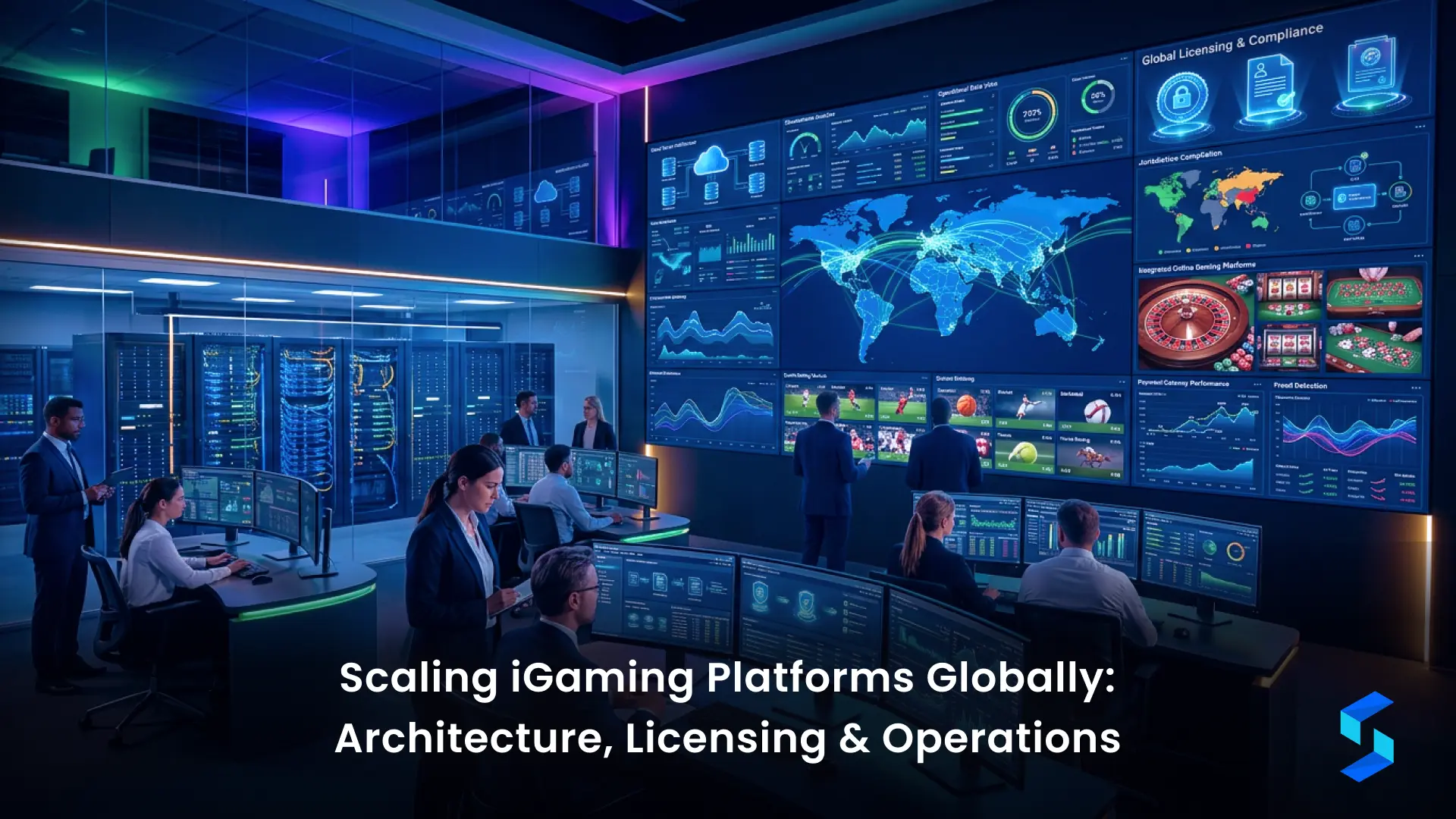
How to Scale an iGaming Platform Globally: Architecture, Licensing, and Operations

Gaurav Choudhary Gaurav Choudhary
Last Updated May 26, 2026
4 mins read
How to Scale an iGaming Platform Globally: Architecture, Licensing, and Operations

Scaling is not deploying to new geographies it is rebuilding your entire operational model. The platform that works for 10,000 monthly active players in one market will not work for 100,000 across five. The payment providers who work in Europe do not work in Southeast Asia. The compliance framework for UKGC does not translate to PAGCOR. The customer support team that handles one language cannot handle six. Global scale requires three tracks developing in parallel: architecture, licensing, and operations.

The global iGaming market size and revenue data should drive your market prioritisation enter the markets with the highest revenue trajectory relative to entry cost, not the markets that are geographically closest or most familiar.

Phase 1: Build the Foundation for Scale

Operators who retrofit single-market platforms for global scale always pay more than operators who build for scale from Day 1. The architectural decisions made in the first platform build determine how expensive each subsequent market entry will be.

1

API-First Architecture

Every function game content, payments, KYC, bonus engine, notifications accessible via a documented API. Market-specific components swap or add without rebuilding core platform logic. Adding a Vietnamese payment processor should be a configuration task, not a development sprint.

2

Configuration Over Code

Regulatory rules, responsible gambling thresholds, deposit limits, and KYC triggers must be configurable from a back-office dashboard not hardcoded in application logic. A platform requiring developer involvement to adjust a deposit limit per jurisdiction cannot scale efficiently.

3

Multi-Region Cloud Infrastructure

Deploy across multiple AWS or GCP regions with automated failover. Players in Southeast Asia hitting a server in London experience 200–300ms additional latency per API call enough to degrade live betting and game performance. Single-region hosting also creates a single point of failure.

4

Centralised PAM with Per-Market Config

A single Player Account Management system supporting per-market configuration: different KYC thresholds, different responsible gambling rules, different bonus eligibility, different currency displays. Separate PAM systems per market means separate player data, separate analytics, and no cross-market view of player LTV.

Phase 2: The Licensing Sequencing Strategy

Multi-jurisdiction licensing is not just about cost it is about sequencing capital deployment against market revenue potential. The multi-jurisdiction iGaming licensing strategy covers how to build a licensing roadmap that enters markets in revenue-optimised order.

  • Stage 1 Offshore entry (Curaçao or Anjouan): $60K–$120K Year 1. Establishes legitimacy for payment processors and game studios. Enables entry in lightly regulated jurisdictions. 6–10 week approval.
  • Stage 2 MGA: Unlocks EU player base and advertising platforms. EUR 120K–200K Year 1. Apply when monthly GGR exceeds $100K–$150K.
  • Stage 3 Tier-1 market licenses (UKGC, GGL, Spelinspektionen): Unlock specific high-revenue markets. Apply when MGA operation is stable and you have dedicated compliance staff.
  • Stage 4 Emerging market licenses: Brazil SPA, Philippines PAGCOR, African national licenses enter as revenue from Stages 1–3 funds the compliance infrastructure required.

Phase 3: Operational Model at Scale

Customer Support Infrastructure

A platform serving 5 markets in 5 languages needs 24/7 support coverage across all time zones, in all 5 languages, with agents who understand each market’s regulatory nuances. AI-powered first-response handling, routing to language-appropriate agents, and per-market escalation paths for regulatory complaints must be designed before scale, not improvised during it.

Payment Operations at Scale

Each market needs 2–3 approved payment processors to avoid single-provider dependency. An operator entering 5 markets simultaneously needs 10–15 processor relationships each requiring separate merchant account applications (4–8 weeks each), rolling reserves (5–10% of monthly volume per processor), and ongoing account management.

Compliance at Scale

A single-jurisdiction compliance function does not work for five jurisdictions. Each jurisdiction needs a designated compliance lead (or shared MLRO with documented competency per jurisdiction), annual audits, regulatory reporting, and ongoing monitoring of rule changes. Budget compliance headcount as approximately 1 FTE per 2–3 Tier-1 licensed markets.

The iGaming development services overview covers the full platform development scope for operators at each scale stage. For B2B operators powering multiple brands, B2B iGaming platform development covers the architecture and commercial model differences. And understanding iGaming provides context on how the operator role evolves as scale increases.

Ready to scale your iGaming platform globally?

Source Code Lab builds globally scalable iGaming platforms multi-jurisdiction architecture, configurable compliance layers, and regional payment integrations with full source code ownership.

Build with Source Code Lab →

Frequently Asked Questions

What is the biggest technical bottleneck when scaling an iGaming platform globally?

Hardcoded compliance and payment logic regulatory rules and payment integrations embedded in application code rather than a configurable back-office. Operators with configuration-driven architecture add a new market in 2–4 weeks. Operators with hardcoded logic take 3–6 months per market and accumulate technical debt with every entry. This is the single architectural decision with the largest compounding commercial impact at scale.

How do operators manage compliance across multiple jurisdictions simultaneously?

Designate a compliance lead per jurisdiction cluster, build a centralised dashboard aggregating monitoring alerts across all markets, and invest in regulatory intelligence services tracking rule changes across your licensed jurisdictions. Annual third-party compliance audits per jurisdiction are typically required. Budget approximately 1 FTE per 2–3 Tier-1 licensed markets for dedicated compliance headcount.

What is the right licensing sequence for global iGaming expansion?

Start with Curaçao or Anjouan ($60K–$120K Year 1) to establish operator legitimacy for payment processors and game studios. Add MGA when monthly GGR exceeds $100K–$150K this unlocks the EU player base and major advertising platforms. Then enter Tier-1 market-specific licenses (UKGC, GGL, Spelinspektionen) as revenue from earlier stages funds the higher compliance overhead required.

How many payment processors does a global iGaming operator need?

A minimum of 2 processors per market (primary and failover) plus market-specific local payment methods. For a five-market operation: 10–15 processor relationships, each requiring separate merchant account approval (4–8 weeks per application) and rolling reserves of 5–10% of monthly volume held for 90–180 days. Start merchant applications 3–4 months before planned market go-live dates.

Gaurav Choudhary

Gaurav Choudhary

| COO

Gaurav Choudhary, COO at Source Code Lab, drives iGaming strategy and growth as a leading iGaming platform provider. With 10+ years of experience in iGaming Industry, he crafts user-centric iGaming software platforms for sportsbook, casino, fantasy, RMG, and B2B solutions. He excels in GTM execution, affiliates, emerging markets, and digital transformation, optimizing products from roadmap to launch.

Leave a Reply

Your email address will not be published. Required fields are marked *

Sigma Asia Event Date and Location Let’s Connect
×
Meet Us At SiGMA Asia Manila
Divider Line

Shaping the Future of iGaming

Shaping the Future of iGaming